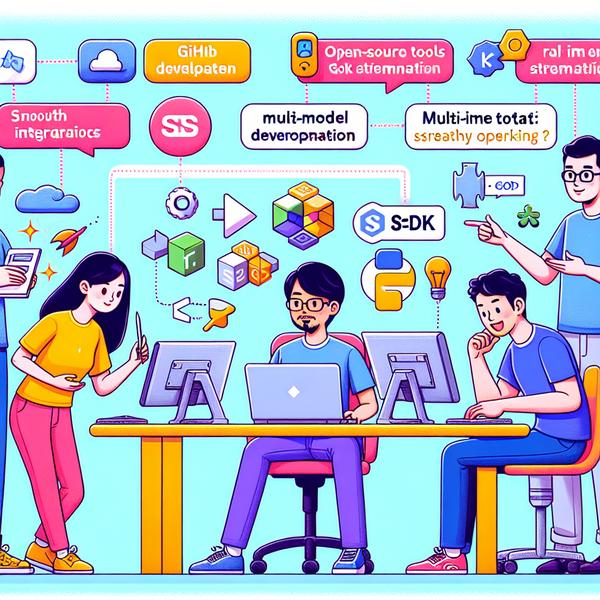
GitHub has unveiled its new Copilot-SDK, a groundbreaking software development kit aimed at embedding its powerful agentic runtime into any application. With this incredible release, developers can now integrate GitHub Copilot’s multi-step reasoning and tool-invoking capabilities into their workflows. The SDK supports Node.js, Python, Go, and .NET, making it highly inclusive, while also providing seamless integration with GitHub authentication and subscriptions. A significant leap forward, the platform ensures a consistent, agent-driven execution loop and opens possibilities for robust MCP integration, multi-model operations, and real-time streaming.
How GitHub’s Copilot-SDK Revolutionizes Open-Source Tools
- GitHub's commitment to open-source innovation is evident in the Copilot-SDK. This tool allows developers to take an existing open-source framework and enhance its capabilities with AI-driven workflows. Imagine tweaking a simple library and enabling it to think like a human assistant—this is no longer science fiction but reality with Copilot-SDK.
- Developers, whether working with Node.js or Python, can now integrate the SDK to foster better collaboration and operational fluidity. The icing on the cake? This tool also interoperates smoothly with GitHub’s large repository of open-source tools, tools that make the vast world of collaborative coding even more cohesive.
- The SDK further simplifies Authentication using GitHub credentials combined with Model Context Protocol integration, which ensures that agents not only maintain multi-turn conversations but also evaluate and modify APIs dynamically.
- Beyond coding, it gives developers the opportunity to integrate open-source weights into progressively intelligent designs. From creating better educational chatbot examples to fictitious retail websites backed by MCP servers, the possibilities are truly immense.
- Think about when Tesla worked off an outdated Algorithm. Refreshed Backends refreshing real streaming. AI-Based Auto Update was much-needed automation functions are increasingly becoming a luxury.
